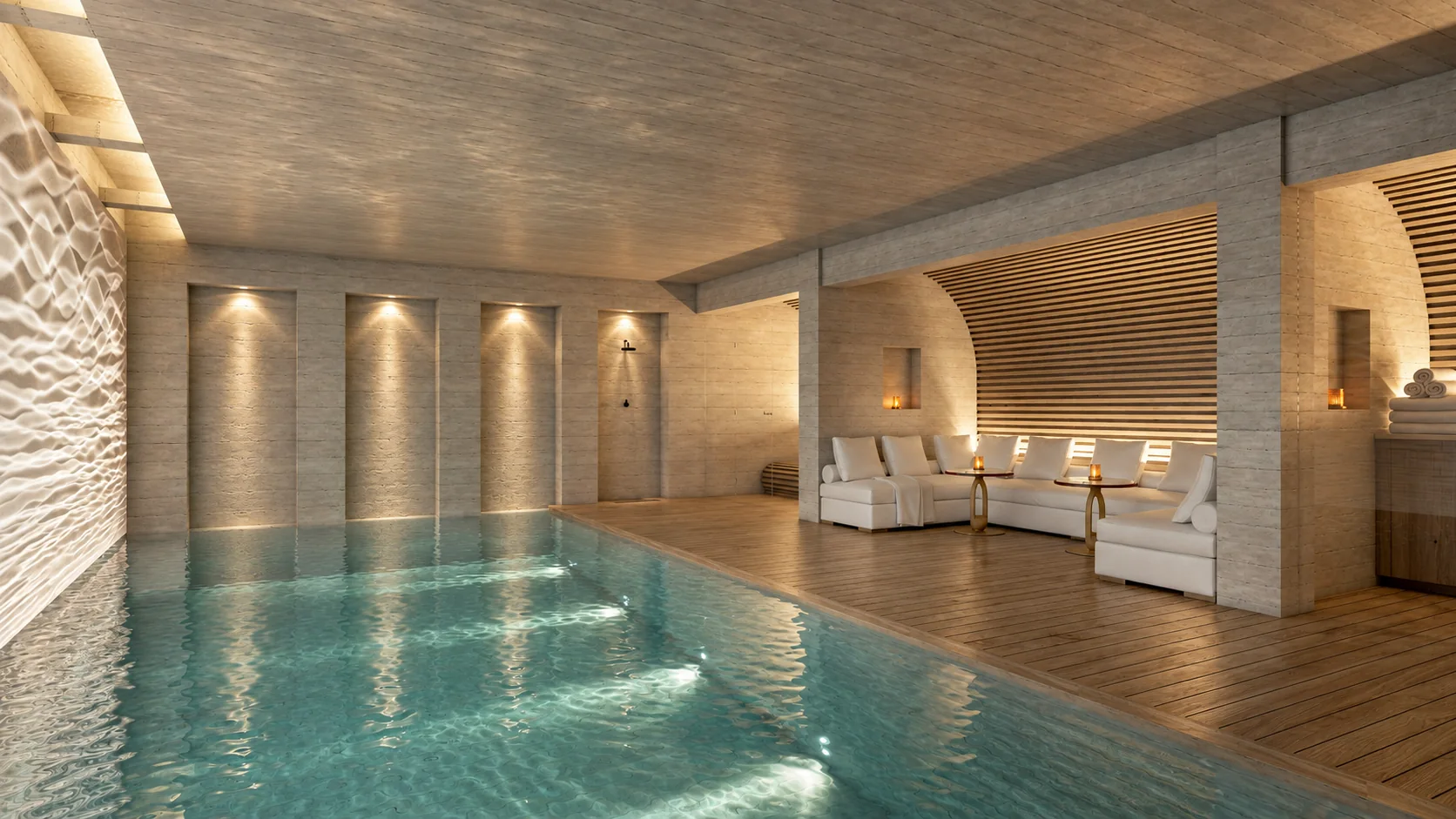
A 360° tour complements still imagery and film. It connects selected viewpoints into one experience that can be explored through a browser, tablet or presentation screen.
Select meaningful viewpoints
The goal is not to multiply panoramas, but to choose positions that genuinely explain the project. An entrance, reception space, living area and terrace can form a concise, legible journey. Movement between those points should feel natural.
Build one coherent atmosphere
Every panorama belongs to the same visual world. Light, materials, styling and exterior views must remain consistent as the user moves through the experience. This continuity avoids a catalogue effect and makes the place feel inhabited.
Add information without clutter
Interactive points can identify a material, open a plan, play a film or present an option. Their design should remain quiet so that the interface supports the architecture rather than covering it. On mobile, generous touch targets and simple navigation are essential.
A sales and decision-making tool
A virtual tour can support off-plan sales, remote presentations and client approvals. It gives several stakeholders a common environment to explore and discuss without imposing one fixed order of discovery.
A successful 360° experience is easy to use, fast to load and visually consistent with every other project asset.