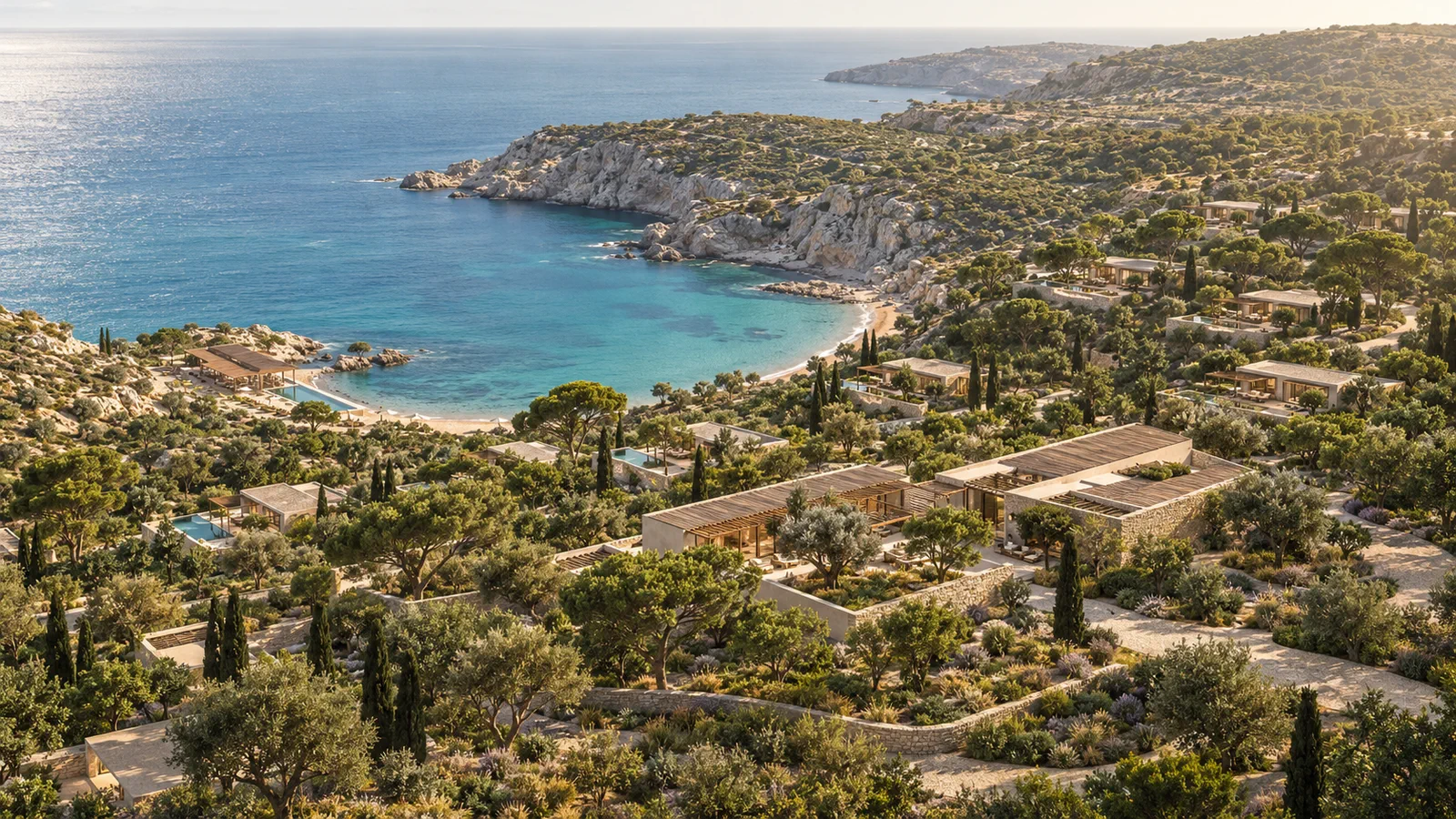
For a premium development, imagery must perform several roles: explain the site, establish a promise, make future uses believable and equip sales teams with formats tailored to each stage of the launch.
Start with positioning
Before production begins, the development’s real promise and intended audience need to be defined. An urban residence, a Mediterranean resort and a heritage scheme call for different viewpoints and a different narrative pace. This clarity helps select scenes that support marketing rather than generating a collection of repetitive views.
Build a visual journey
An effective campaign moves between scales. Destination views locate the project; masterplan perspectives explain its setting; shared spaces and interiors bring the experience to life; material details signal the level of finish. The order of discovery becomes a genuine visit, even before the place exists.
Plan formats from the outset
Websites, sales brochures, social media, outdoor displays, screens and film do not use imagery in the same way. Anticipating aspect ratios, crops, motion and copy areas protects the composition after approval. A shared art direction then allows the campaign to expand without losing consistency.
Communicate accurately and confidentially
Visuals should remain faithful to the project and clearly distinguish an intention, a conceptual study and a completed commission. Studio Octopus publishes a client name or real commission only with explicit permission. When a brief is confidential, its context can be presented without identifying the commissioning party.
A premium property campaign does more than show a development: it organises the reasons to believe in it, then the reasons to desire it.