
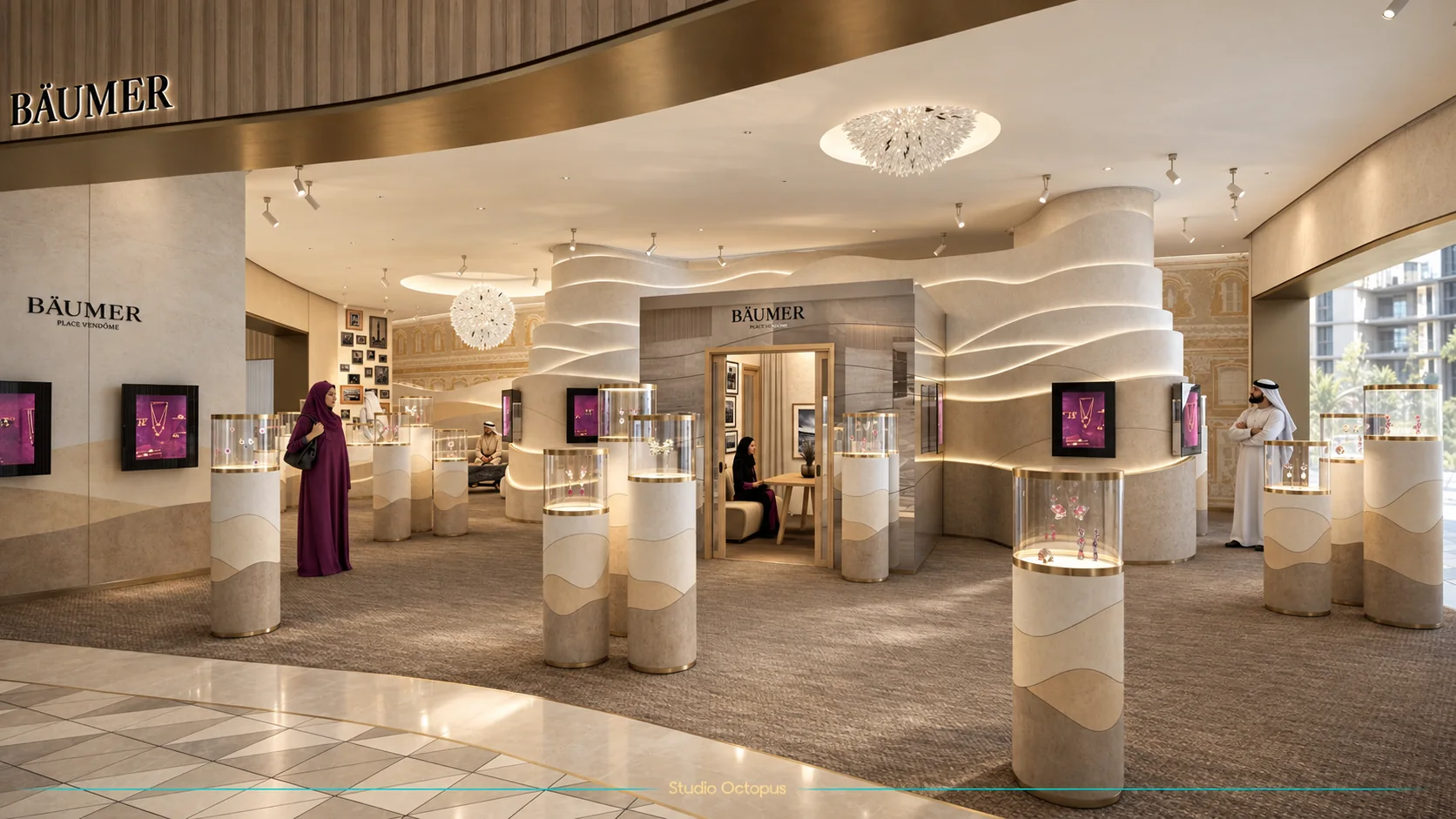
In a boutique, every element contributes to the narrative: façade, circulation, furniture, lighting, merchandising and material rhythm. CGI lets teams review those elements together before prototyping or roll-out.
Connect architecture and identity
The project should feel recognisable without turning the image into an advertisement. Colour, material, proportion and graphic brand gestures become part of the architectural composition. This global view is especially valuable for a flagship, corner or new international concept.
Review the customer journey
Composition reveals thresholds, circulation axes and product hierarchy. It helps teams assess whether one element attracts attention without blocking the view, whether a counter has the right presence and whether lighting guides the journey instead of flattening it.
Compare design options
Material, colour, layout, lighting intensity and merchandising density can all be reviewed before fabrication. For reliable comparisons, each option should retain the same viewpoint and lighting conditions.
Support design roll-out
A coherent image set can support internal approvals, partner discussions, landlord submissions and launch communication. Where confidentiality matters, distribution levels and delivered files can be adapted for different project teams.
Retail CGI is both a design tool and a persuasive asset. Its strength lies in balancing spatial precision with clear brand expression.