
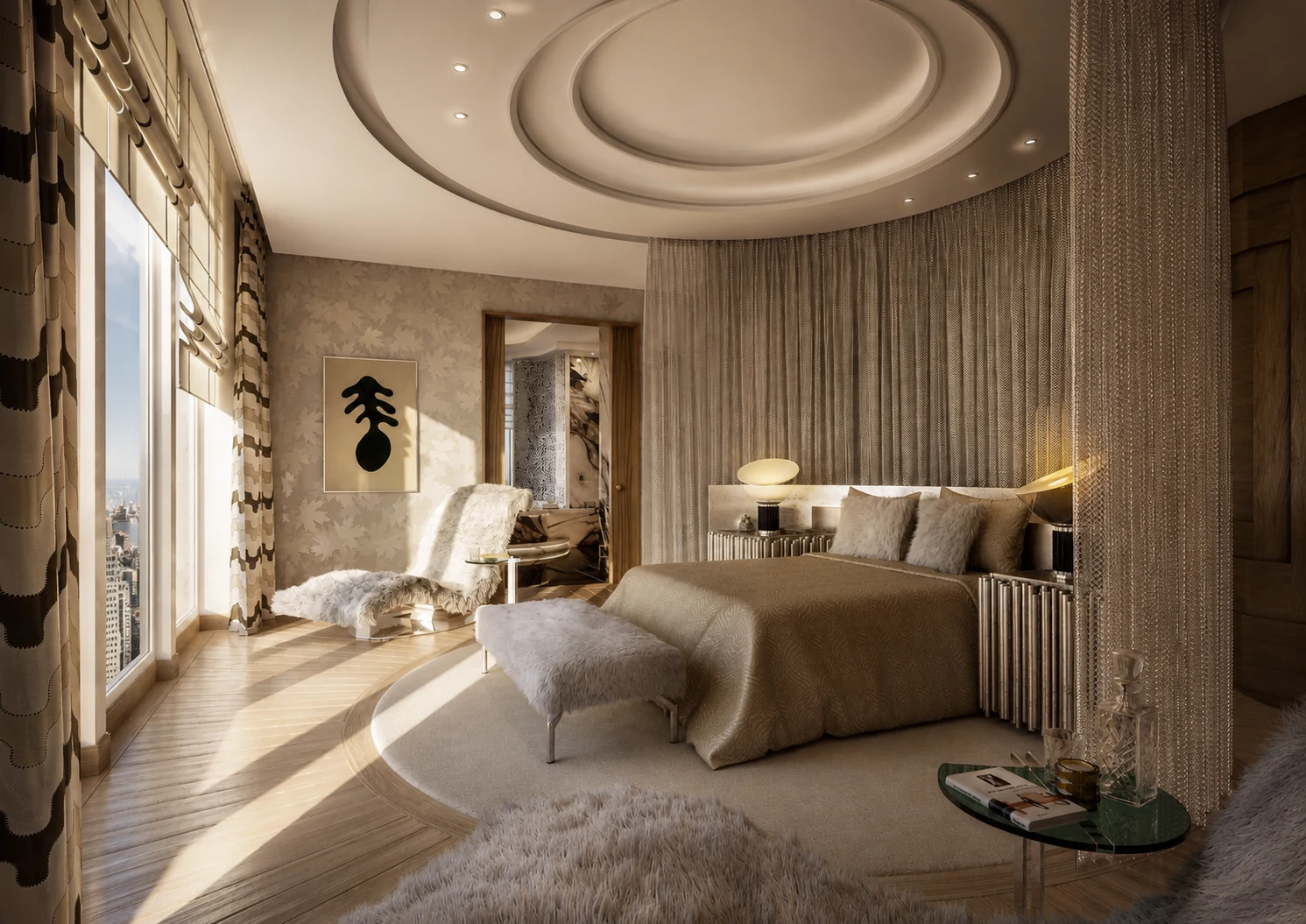
In high-end design, photorealism is not the final objective. The strength of an architectural image lies in the relationship between viewpoint, light, materials, styling and human presence.
Every image begins with intent
Before rendering, the studio needs to understand what the place should express: calm, grandeur, intimacy, warmth or restraint. That intent informs composition and staging. A private residence should not be narrated like a palace lobby, even when both share an exceptional level of finish.
Light, materiality and scale
Light describes volume and gives materials a believable presence. Timber, stone, metal, fabric and glass must behave convincingly while supporting the composition. Objects and people establish scale; posture, styling and discretion all contribute to the positioning of the project.
A decision-making tool and a communication asset
Architectural CGI can help teams review a viewpoint, mood, palette or detail before construction. Once approved, the same visual direction can support a competition entry, client presentation, property campaign or early hospitality communication.
Preparing an efficient production
Plans, elevations, material references, lighting intent and furniture selections create a reliable starting point. Where choices remain open, early imagery can become an exploration tool. A staged process — composition, visual development, refinement and delivery — focuses feedback at the right moment.
Convincing luxury CGI combines architectural precision with art direction. It does not decorate the design; it makes its distinctive qualities legible.